
Herniated Disc Treatment in Scottsdale, AZ: Understanding Disc Pain, Nerve Compression, and Conservative Care
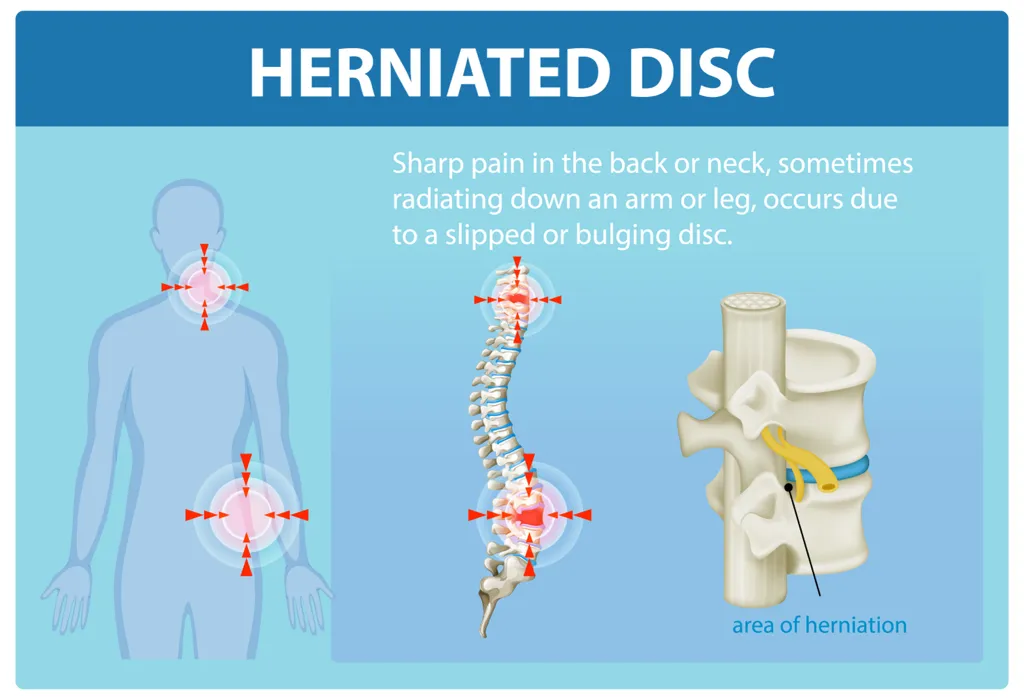
A herniated disc can cause significant back or neck discomfort, particularly when displaced disc material irritates nearby spinal nerve roots. Some patients experience localized pain, while others develop symptoms extending into an arm or leg.
At Secrest Family Chiropractic in Scottsdale, Arizona, Dr. Daniel P. Secrest evaluates spinal symptoms and provides individualized conservative treatment options for appropriately selected patients.
A thorough assessment is essential because not every disc herniation causes pain, and some symptoms require medical or surgical evaluation.
request an appointmentWhat Is a Herniated Disc?
The spine contains intervertebral discs positioned between adjacent vertebrae.
Each disc consists of a softer inner region surrounded by a stronger outer ring.
A herniation occurs when disc material extends beyond its usual boundaries through a weakened or disrupted portion of the outer disc.
Herniations can occur in the cervical, thoracic, or lumbar spine, although the neck and lower back are more commonly affected.
What Causes a Herniated Disc?
Age-Related Disc Changes
Discs gradually lose hydration and undergo structural changes with age.
Repetitive Mechanical Loading
Repeated bending, lifting, and twisting can contribute to spinal stress in certain circumstances.
Sudden Physical Exertion
A disc herniation may become symptomatic after a particular movement or lifting activity.
Individual Risk Factors
Genetics, smoking, occupational demands, and other factors can influence disc health.
Symptoms of a Herniated Disc
Lumbar Disc Herniation
Symptoms may include lower back pain, radiating leg pain, numbness, tingling, or muscle weakness.
Cervical Disc Herniation
A cervical herniation may produce neck pain with symptoms extending into the shoulder, arm, or hand.
Asymptomatic Disc Herniation
Some disc herniations are discovered incidentally and cause no symptoms.
This is why imaging findings must be interpreted alongside the clinical examination.
How Is a Herniated Disc Diagnosed?
Evaluation typically includes medical history, neurological examination, muscle strength testing, reflex assessment, and sensory testing.
MRI may be recommended when neurological findings, persistent symptoms, or other clinical factors indicate a need for additional investigation.
Can Chiropractic Care Help a Herniated Disc?
Some patients with disc-related mechanical pain benefit from conservative treatment, but chiropractic manipulation is not appropriate for every disc condition.
Treatment may include gentle mobilization, exercise, activity modification, and education.
Manual techniques should be selected carefully when neurological symptoms are present.
There is insufficient evidence to claim that chiropractic adjustments reliably move herniated disc material back into place.
Do Herniated Discs Heal Without Surgery?
Many symptomatic lumbar disc herniations improve with conservative management.
Disc material can sometimes decrease in size over time through natural biological processes.
However, persistent or progressive neurological deficits may require specialist assessment and, in some cases, surgery.
When Is a Herniated Disc an Emergency?
Seek immediate medical attention for new bowel or bladder dysfunction, saddle anesthesia, progressive muscle weakness, or significant neurological deterioration.
Frequently Asked Questions About Herniated Discs
What does a herniated disc feel like?
Symptoms may include localized back or neck pain, radiating pain, numbness, tingling, or weakness.
Can a herniated disc heal naturally?
Yes. Many cases improve over time, and some herniations decrease in size through natural resorption.
Can chiropractic care help a herniated disc?
Selected patients may benefit from conservative musculoskeletal care, but treatment must account for nerve involvement and contraindications.
Is a bulging disc the same as a herniated disc?
No. A disc bulge generally involves broader extension of disc tissue, while a herniation describes a more localized displacement.
Does every herniated disc require surgery?
No. Many patients improve without surgery.
Is walking safe with a herniated disc?
Walking is often appropriate when tolerated, but activity recommendations should reflect symptoms and neurological findings.
When should I see a spine specialist?
Specialist evaluation may be appropriate for progressive weakness, persistent disabling symptoms, or findings suggesting significant nerve compression.
Herniated Disc Evaluations in Scottsdale
If back or neck pain is accompanied by radiating symptoms, Secrest Family Chiropractic can evaluate whether conservative care is appropriate or whether additional medical assessment is needed.
Contact Information
Secrest Family Chiropractic
3350 N Hayden Rd #112 Scottsdale, AZ 85251
Phone: (480) 994-4411
Website: secrestfamilychiropractic.com